
Enid Previous Residents by Research Era
Different Enid records cover different slices of an address history. The online Garfield County legal index is the useful modern title starting point, but its official page says saved online records begin in 2003. Earlier work moves to the clerk counter, books, and grantor-grantee resources. Occupant research then relies on city directories, newspapers, census schedules, and maps. Use the oldest record that fits the question, and write down what role each source proves.
| Source | Years it covers | Where held | What it shows |
|---|---|---|---|
| Garfield online legal index | 2003-current saved records | County Clerk legal page | Grantor, grantee, date, instrument, book, and page fields |
| Clerk books and in-house database | Back to 1988 is described; earlier books exist | Garfield County Clerk office | Older title and grantor-grantee research, subject to clerk confirmation |
| Enid city directories | 1906-1940 documented Polk run | Library, OHS, and Heritage Center leads | Name and address clues; street listings begin in 1923 |
| NARA Enid directories | 1928, 1930-31, 1933, 1935 | National Archives city-directory holdings | Microfilm lead when a local scan is unavailable |
| Federal census | 1790-1950 released | NARA and library databases | Dated household and address clues; 1890 is largely unavailable |
| Sanborn maps | Enid material as early as 1894; 1925 inspected | Library of Congress, OHS, and library leads | Building and street context, not an occupant name |
| Building reports and CivicWeb | Permit reports visible for 2021-2024 and 2026 January-July | Enid Community Development and CivicWeb | Address, date, project, and public-action leads |
Start with a present-day parcel when the goal is ownership history. Start with a dated directory or census when the goal is who lived there before. The difference keeps owner, occupant, mailing, and business clues from being merged into one unsupported answer.
Fix an Enid Address Before Looking Back
An address is not always one stable fact. The Garfield County Assessor parcel-search landing page leads to a dynamic QPublic application after a tax-roll disclaimer, and the live fields were not captured in the research. The official Enid parcel ArcGIS service can support parcel identification and query work. Capture a parcel ID and legal description when the live record displays them, but do not invent missing fields.
| Original address | Keep the spelling, directional suffix, number, and place wording as the source printed them. |
|---|---|
| Situs address | The physical parcel address, if the live card distinguishes it from a mailing address. |
| Legal description | Addition, block, lot, or section, township, and range. This is the durable bridge to older title records. |
| Address role | Mark whether the source uses it for an owner, occupant, business, parcel, or mailing purpose. |
| Source date | Record the publication, recording, or event date separately from the address itself. |
Kenwood and Waverley are good examples of why legal wording matters. Kenwood was platted in 1894, and Waverley additions followed from 1902 through 1907. The Kenwood and Waverley guideline and the city code can supply place context, but an exact block and lot is needed before assigning an address to a historic district.
Note: Preserve an old street or place label in the notes, because Enid, Enid Station, North Enid, and postal wording can describe different historical settings.
Enid Previous Residents and the Deed Chain
For past owners, the Garfield County legal index is the first official search. Its structured mode uses Addition, Township, Block, From Date, To Date, and Instrument Type. Legal Name/Bk&Pg is the route for grantor-grantee and book-and-page work. Results show Rec#, Grantor, Grantee, Date, Ins Type, Book, and Page. Save that index result before requesting the document or asking the clerk for a copy.
- Find the current parcel in the assessor or GIS source and retain its legal description, parcel ID, and owner-of-record display if shown.
- Search the current owner as a grantee in the Clerk index, then record the purchase deed's seller, date, book, page, and instrument type.
- Search that seller as a grantee to locate the earlier purchase, comparing addition, block, lot, or section details at every step.
- Repeat the same comparison through each conveyance. A street address is a crosswalk, not a replacement for a legal description.
- When the online period ends, move to Legal Name/Bk&Pg, the clerk's in-house resources, grantor-grantee books, or the counter route.
- Grantor
- The party transferring an interest in a recorded instrument.
- Grantee
- The party receiving that interest. Searching a seller as a prior grantee is how a deed trail moves backward.
- Chain of title
- The linked sequence of title instruments for the same legal description, not a list of every person who occupied the address.
- Legal description
- The addition, block, lot, or survey wording that ties old and new title records to the same tract.
Enid Previous Residents Before 2003
The Clerk's web page states that records are saved from 2003, so a missing online hit is not proof that an older Enid conveyance does not exist. An official OCC land-records booklet describes an in-house Garfield database back to 1988 and earlier books and grantor-grantee resources. Confirm exact availability with the office rather than promising a particular year is digitized.
The Garfield County Clerk is the Register of Deeds. The office is at 114 W Broadway, Room 105, Enid, with a mailing address of PO Box 1664, Enid, OK 73702. The clerk contact page lists 580-237-0226, hours of 8:00 to 4:30, and a 4:00 filing cutoff. Clerk-made copies are listed at $1 per page and clerk-certified copies at $2 per page on the current fee schedule. Ask about the record, date range, and book or instrument number before ordering.
The Garfield County Clerk landing page is the source for the office's prior-resident and deed-record access route.
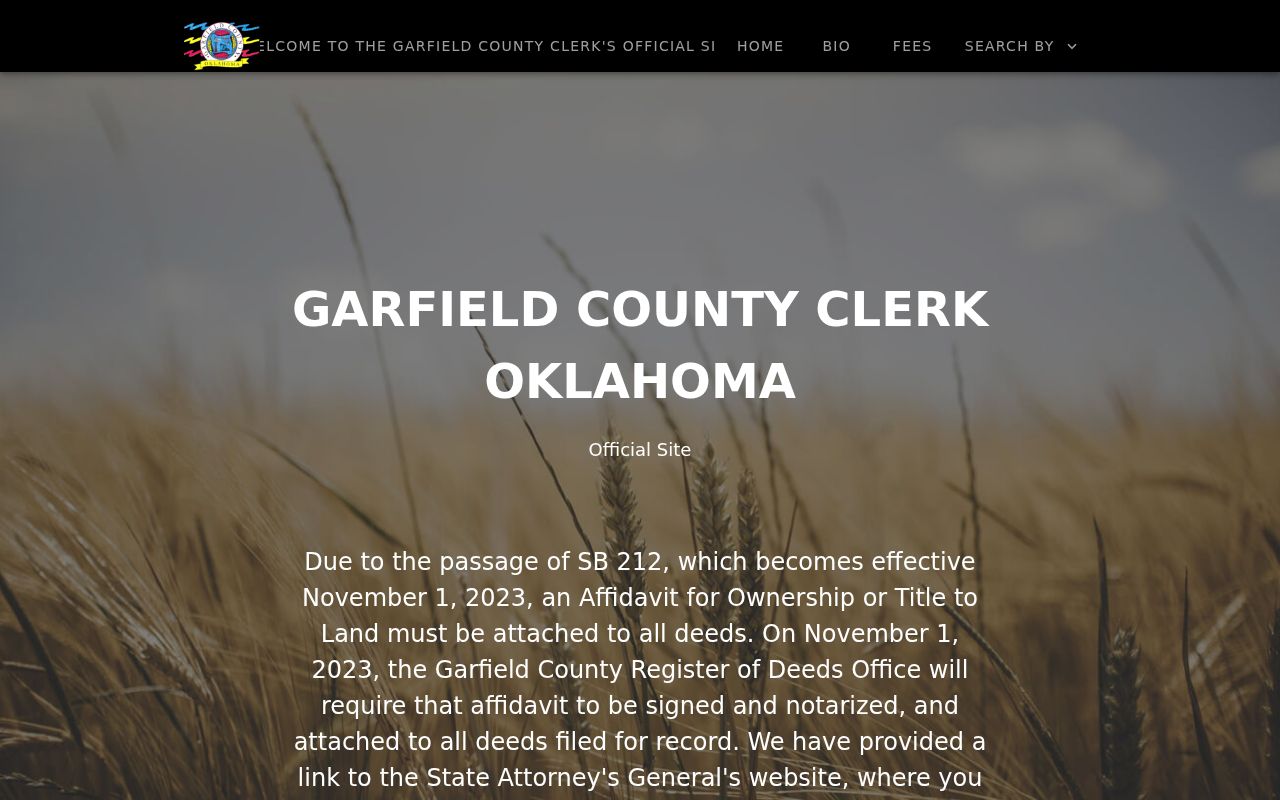
The office page supports the required counter and records-custodian route when the online index does not reach the earlier address history.
The County Clerk contact page provides the Enid office hours and contact details used for older-record requests.
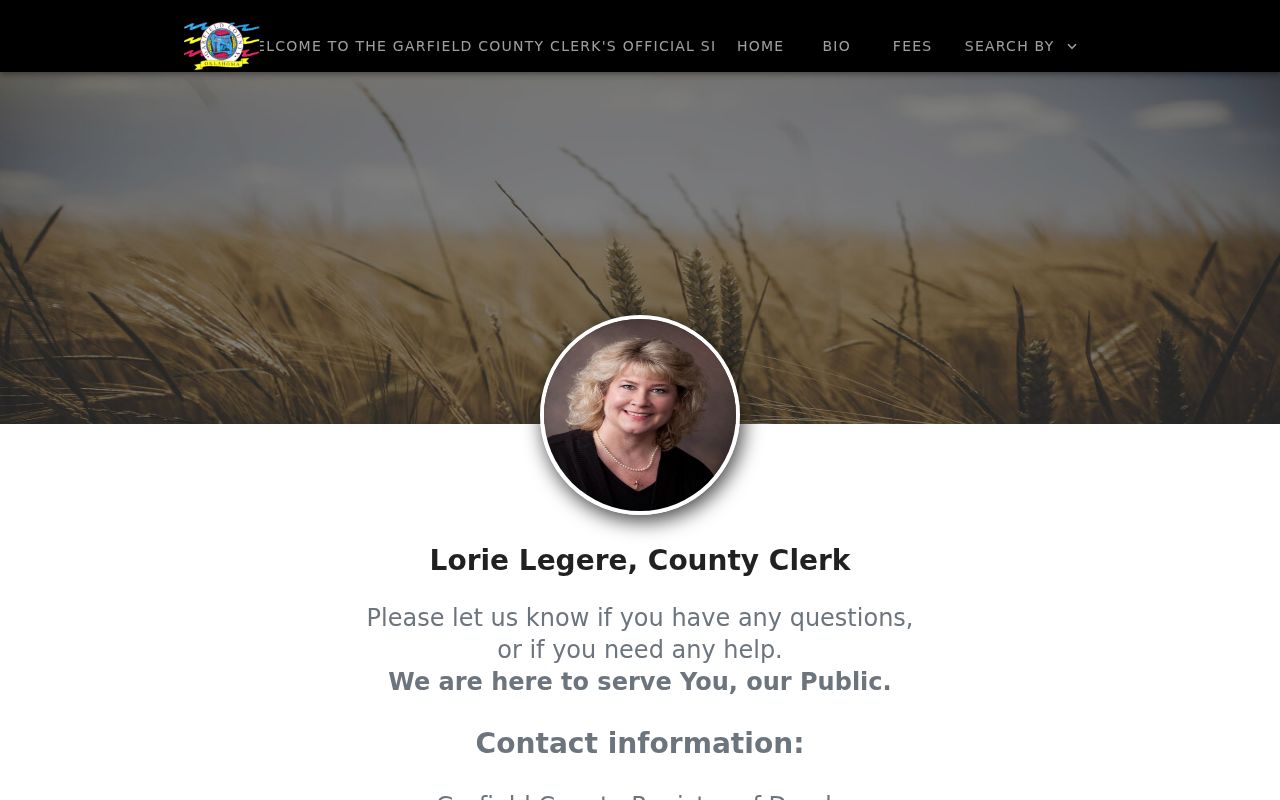
Use the contact information to confirm whether the needed volume, certified copy, or index search is available before traveling to the clerk office.
Enid Previous Residents and 1923 Addresses
Street-address research changes at 1923. Oklahoma Historical Society material says Enid directories did not list buildings by street address before that year. For earlier previous residents, use the name and business sections, an addition and lot, local newspapers, plats, and Sanborn maps. A pre-1923 listing can still be valuable, but it needs a second record before it is assigned to a modern house number.
The 1906 to 1940 documented R.L. Polk run, plus the specific 1921 and 1933 references, gives a practical set of comparison points. From 1923 onward, a by-address section may support an occupant clue. The historical volumes themselves are covered by the Enid City Directory, which explains the library, microfilm, and federal holding routes without treating the collection as a complete online run.
North Enid and Enid Station add another continuity trap. An older source can preserve a place label that does not map cleanly to the city today. Keep the original label beside the normalized address, then use a plat, map, or dated city record to test the connection.
Enid Previous Residents Through Sanborn Maps
A Sanborn map can answer a narrow but important house-history question: was there a building at that block, and what did the map show about its use and construction? The 1925 Enid Sanborn map is a direct local image, and OHS material identifies Enid map leads as early as 1894. Library of Congress guidance explains the city and date arrangement, street indexes, symbols, and correction sheets.
Do not turn a footprint into a resident list. Instead, pair a map edition with a dated directory, newspaper notice, deed, or census. A map can help identify a changed street layout, building use, story count, or the order of structures along a block. That context is useful when the directory wording and current parcel address seem to disagree.
Note: Sanborn evidence is strongest when it confirms the place and date while a separate record provides the name of an owner or occupant.
Enid Previous Residents in Directories and Census
Title work identifies past owners, but a household trail needs records that show who lived at the address. Use an Enid directory year, a census year, a newspaper, and a local record as separate layers. The NARA census guide describes released federal schedules through 1950 under the 72-year rule; from 1850 through 1950, schedules may include name, age, birthplace, marital status, and street address. The 1890 schedules are largely unavailable.
- Choose the earliest dated address wording and find the nearest available directory edition, beginning with the by-address section after 1923.
- Record the printed household name, page, address role, and neighboring entries without inferring a relationship.
- Pair that edition with the closest released census year and compare the address, household composition, and date.
- Check a newspaper image, obituary lead, deed, permit report, or probate file when a person appears or disappears between the dated sources.
- Keep owner, occupant, and business references in separate fields until two sources support the same conclusion.
The Enid CivicWeb document library adds a municipal layer. Its advanced search supports exact phrase or wildcard searching, all words, one-or-more words, close proximity, exclusions, sort controls, a location selector, Search, and Browse. More than 30 years of City Commission minutes were described as digitized in the 2024 annual report, but the collection is not a comprehensive resident directory.
The Enid CivicWeb library is the source for this public-document search channel.
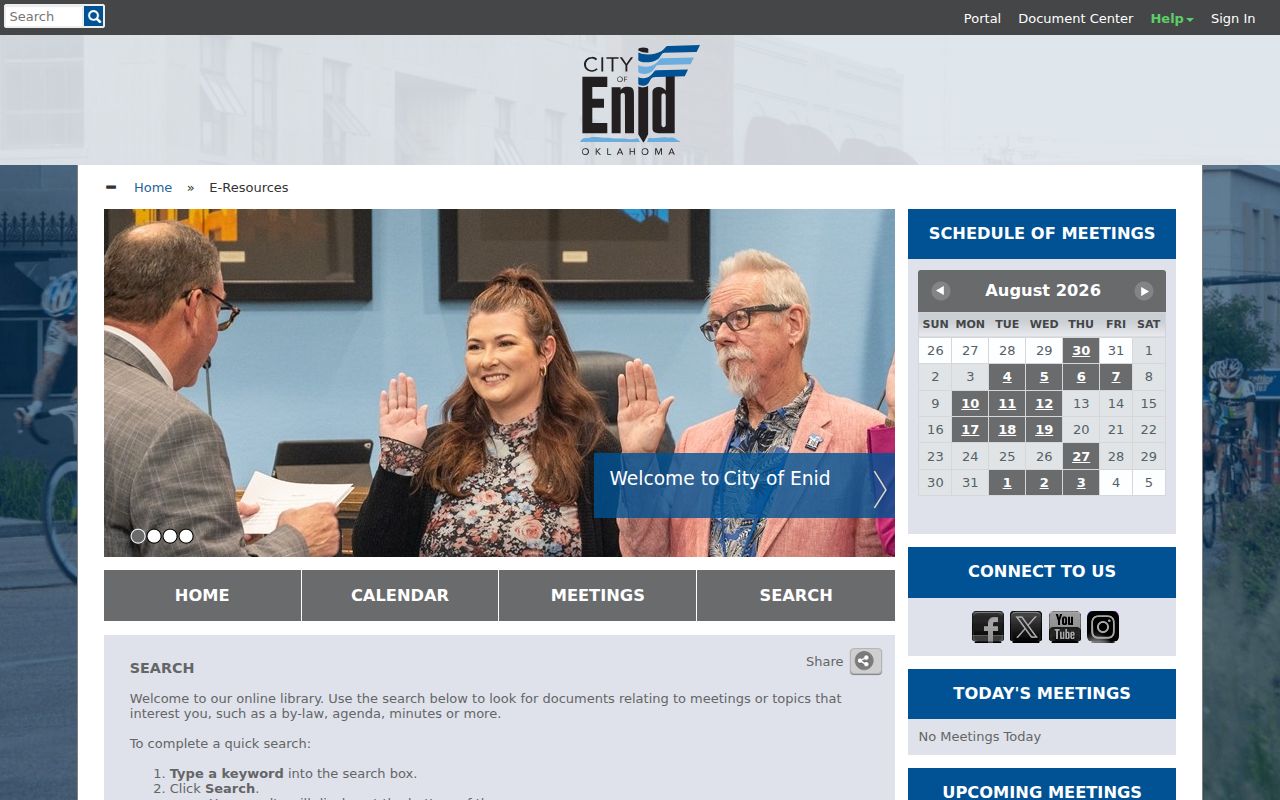
The CivicWeb search controls can connect an address or name to a dated public action, while leaving household conclusions to the separate directory and census evidence.
Enid Previous Residents, Probate, and Obituaries
Obituaries and probate can close an address trail or explain why a name disappeared from a directory. The Garfield County Court Clerk and Oklahoma State Courts Network are the court routes. The Court Clerk says it handles records from territorial days to the present, while older probate and civil scans are still being uploaded. A public portal result is a lead, not a substitute for confirmation when a file is protected, off-site, or not yet scanned.
The Enid Public Library directs obituary questions to its resources and identifies the Garfield County Genealogy Society as a local lead. The Cherokee Strip Regional Heritage Center asks for an exact date and place of death for its obituary and marriage research. Gateway newspaper scans can add notices, but image verification and a date-address intersection still matter. A death or estate filing does not by itself prove where every named relative lived.
Enid Previous Residents and Record Breaks
Enid's record trail has real historical breaks. Garfield County's history begins with the 1893 Cherokee Outlet opening, while early records can use Enid, North Enid, Enid Station, or a postal or county place label. The county's first ornate courthouse was completed in 1907, destroyed by fire on January 29, 1931, and replaced by the present Art Deco courthouse in 1934. These events do not erase every record, but they explain why the custodian and search route may change across an old address history.
Use the courthouse dates as a search split, then compare deeds, plats, directories, newspapers, and the city record route. The 1899 Garfield County Democrat page contains city-officer and postal-directory information, while the December 9, 1893 Enid Enterprise is an early post-Run newspaper sample. Those sources add period context. They do not establish that a person at a historic address is the same person in a later record.